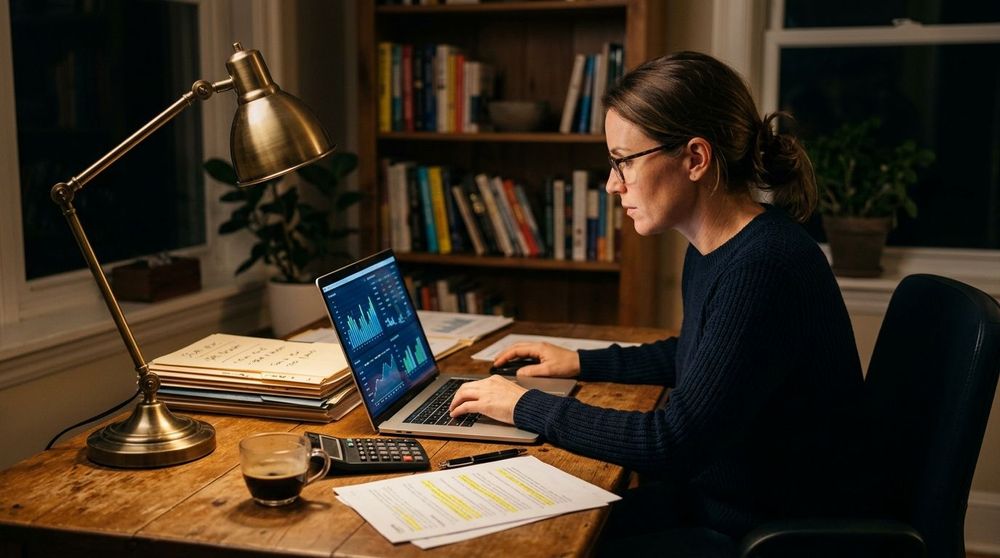
It’s 2:14 AM. Your desk is a graveyard of half-empty espresso cups and three years of tax returns that don’t seem to tell the story you want them to. You’re staring at a 40-page PDF titled "SBA 7(a) Borrower Information Form," and the section on "Collateral" feels like a personal interrogation. You know your business can scale—the 22% month-over-month growth in your coffee roastery proves it—but the bank sees a risky startup. You need an sba small business loan to move from a 5-kilogram roaster to a 30-kilogram Loring, but the paperwork feels like a barrier designed to keep you small.
Most founders treat the Small Business Administration (SBA) like a direct lender. It isn't. The SBA is essentially a giant co-signer. They guarantee up to 85% of your loan, reducing the risk for the local bank sitting across the street. In 2023 alone, the SBA backed over $27 billion in 7(a) loans. Yet, nearly half of all applicants are shown the door before they even reach the SBA’s desk. This guide breaks down the cold, hard data of how to stay in the 52% that get funded.
Why This Matters for Your Business: The Cost of Capital
In the world of funding, debt is almost always cheaper than equity. If you raise $500,000 from an angel investor, you might give up 10% to 15% of your company. If that company sells for $50 million in five years, that "cheap" $500,000 just cost you $7.5 million. Conversely, an sba small business loan at a 10.5% interest rate over 10 years will cost you roughly $318,000 in total interest. No equity lost. No board seats surrendered.
For businesses with physical assets—like a workshop, a salon, or a farm—the SBA 504 program offers fixed-rate, long-term financing that is currently outperforming traditional commercial mortgages. While venture capital is drying up for anything that isn't AI-adjacent, the SBA budget remains robust. Understanding the mechanics of these loans is the difference between scaling on your terms or begging for a term sheet that dilutes your vision.
The 5-Step Process That Actually Works
Securing an sba small business loan isn't a lottery; it's a math problem. If you solve for the lender's anxiety, you get the check.
- Audit Your FICO SBSS Score: Most founders know their personal credit score. Few know their FICO Small Business Scoring Service (SBSS) score. The SBA uses this to pre-screen 7(a) loans under $350,000. It ranges from 0 to 300. If you’re under 155, your application is likely dead on arrival. You can check this through specialized credit bureaus before you ever talk to a banker.
- Calculate Your Debt Service Coverage Ratio (DSCR): Lenders want to see a DSCR of at least 1.25. This means for every $1 of loan payment, your business generates $1.25 in free cash flow. If your 2023 tax returns show you "optimized" your taxes by showing zero profit, you’ve effectively disqualified yourself for a loan. You can't have it both ways.
- Choose the Right Lender: Don't just walk into the bank where you have your checking account. Look for "PLP" (Preferred Lender Program) status. These banks have the authority to make final credit decisions without sending the file to the SBA for a weeks-long review. It cuts your wait time from 90 days to 45.
- The "Global Cash Flow" Defense: If your business is young, the bank will look at your personal income + business income vs. personal debt + business debt. If you’re carrying a $4,000 monthly mortgage and a $800 car payment on a $60,000 salary, the math won't work, regardless of how good your business plan is.
- Prepare the "Use of Proceeds" Statement: Be surgical. "Working capital" is a red flag for "I'm disorganized." Instead, use: "$142,000 for Inventory (see Appendix A), $58,000 for 2x Delivery Vans, $50,000 for Q3 Marketing."
While you prepare these documents, it’s worth looking at what investors are looking for in your industry. Sometimes a hybrid of debt and equity is the fastest path to a "yes."
What Most Founders Get Wrong About SBA Loans
The biggest myth is that the SBA loan is "government money." If you default, the government pays the bank, but the government then comes after you. These loans almost always require a personal guarantee from anyone owning 20% or more of the company. This means your house, your savings, and your personal assets are on the line. It’s the ultimate skin in the game.
Another common mistake is ignoring the "Credit Elsewhere" test. The SBA is a lender of last resort. If a bank is willing to give you a conventional loan at market rates without the SBA guarantee, you technically don't qualify for the SBA program. However, most small businesses easily pass this because they lack the 20% to 30% down payment or the 5 years of history that conventional commercial loans demand.
Side-by-Side: The Real Numbers
Let's look at the two most popular options for an sba small business loan to see which fits your 2026 growth plan:
- SBA 7(a) Loan: The "Swiss Army Knife." Max amount is $5 million. Use it for working capital, equipment, or buying out a partner. Rates are typically Prime + 2.25% to 4.75%. Terms go up to 10 years for equipment and 25 for real estate.
- SBA 504 Loan: The "Builder." Best for buying land or heavy machinery. It involves a three-way split: 50% from a bank, 40% from a Certified Development Company (CDC), and 10% from you. The CDC portion is a fixed rate, often lower than 7(a) rates.
If you're unsure which path to take, you can browse real investment opportunities on WePitched to see how similar businesses in your sector are structuring their capital stacks. Many successful startups use an SBA loan to fund the "boring" assets (trucks, ovens, warehouses) while using investor capital for high-risk growth (software, R&D).
Tools and Resources (With Actual Costs)
Don't fly blind. Use these tools to build a bank-ready package:
- LivePlan ($20/mo): Specifically designed to produce SBA-compliant financial projections. Don't use a messy Excel sheet.
- Nav ($30/mo): One of the few places where you can actually see your FICO SBSS score and monitor your business credit reports (Dun & Bradstreet, Experian Business).
- SBA Size Standards Tool (Free): Ensure you actually qualify as a "small" business. For most industries, this is under 500 employees or under $7.5 million in annual receipts.
Frequently Asked Questions
What is the minimum credit score for an sba small business loan?
While there is no official floor, most banks want a personal FICO score of 680 or higher. For the FICO SBSS (business score), the SBA requires a minimum of 155, though many lenders prefer 160+ for faster approval.
How long does it actually take to get funded?
A standard 7(a) loan takes 60 to 90 days from the first meeting to money in the bank. If you use an SBA Express loan (up to $500,000), you can get a response within 36 hours, but closing still takes 30+ days.
Do I need collateral for an SBA loan?
For loans under $50,000, lenders might not require collateral. For anything over $350,000, the SBA requires the lender to collateralize the loan to the maximum extent possible, which often includes a lien on your personal residence if business assets aren't enough.
Can I use an SBA loan to buy an existing business?
Yes, this is one of the most common uses for the 7(a) program. You will typically need a 10% down payment, and the business's historical cash flow must be enough to cover the new debt.
The Hard Truth About SBA Financing
The single most important takeaway is this: The bank isn't betting on your idea; they are betting on your ability to follow a process. An sba small business loan is an exercise in discipline. If you can't provide a clean profit and loss statement today, you aren't ready for $500,000 of the government's guaranteed money.
Stop guessing what the bank wants. Start by checking your SBSS score and cleaning up your personal debt-to-income ratio. If the bank route feels too slow or restrictive, you can always explore AI tools to prepare your pitch for private investors who might care more about your vision than your 2022 tax returns. Debt is a tool, not a lifeline. Use it to build an empire, not to patch a sinking ship.